What Is a Heat Index? Chicago's Warning

Admin New
Daftar Isi
Understanding the Severe September Heat Wave
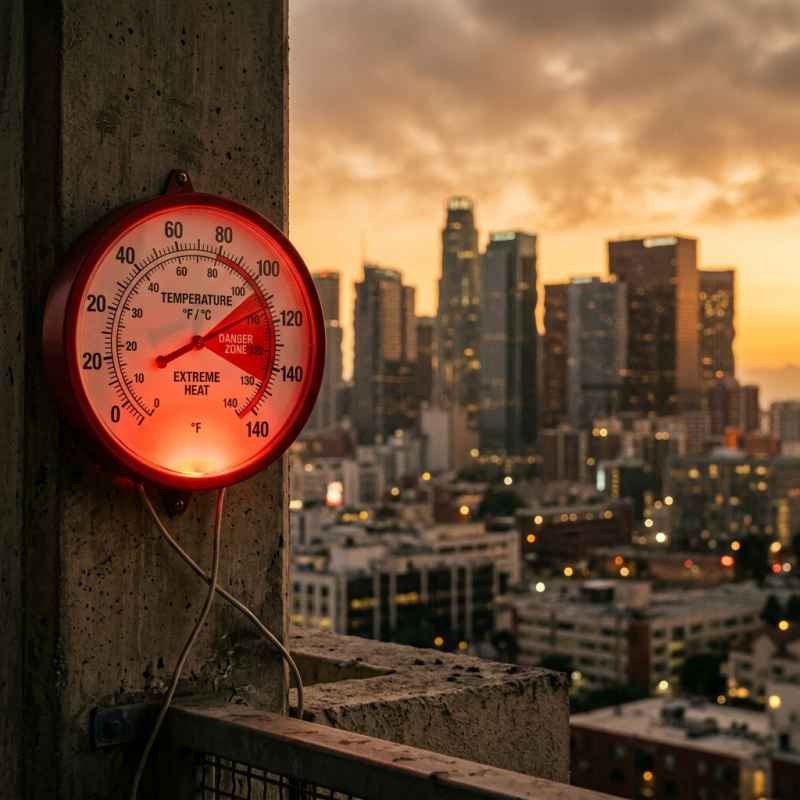
September typically brings the promise of cooler autumn weather, but Chicago residents are currently facing a completely different reality. Multiple weather authorities and news outlets have issued severe heat advisories for the Chicago area this week. While the actual air temperatures might read in the low to mid-90s, meteorologists are warning that the "feels-like" temperatures are expected to soar up to a blistering 105 degrees. This massive gap between the actual air temperature and what our bodies experience brings an important meteorological term to the forefront of everyone's minds: what exactly is a heat index, and why is it so critical to our health and safety during extreme weather events?
What Exactly Is a Heat Index?
The heat index, frequently referred to by weather forecasters as the "feels-like" temperature, is a scientific measurement that combines the actual air temperature with relative humidity to determine how hot the weather actually feels to the human body. You can think of it as the summertime equivalent of the winter wind chill factor. When humidity levels rise significantly, it fundamentally alters the way our biological cooling systems function in hot environments.
The Critical Role of Humidity
The human body cools itself primarily through the production and evaporation of sweat. When sweat evaporates from the surface of our skin, it naturally draws heat away from the body, lowering our core temperature. However, when the surrounding air is already saturated with water vapor (high humidity), our sweat cannot evaporate efficiently. The moisture remains on our skin, trapping the body's internal heat. Consequently, the body feels significantly hotter than the ambient air temperature suggests. This physiological reaction is exactly why a heat index of 105 degrees is far more dangerous than dry heat at the exact same temperature.
The Health Dangers of High Heat Indices
Prolonged exposure to a heat index exceeding 100 degrees Fahrenheit carries very real and potentially fatal health risks. When the body loses its natural ability to regulate its internal temperature, cascading medical complications can occur in a remarkably short period.
Recognizing Heat-Related Illnesses
The two most common and dangerous conditions triggered by extreme heat indices are heat exhaustion and heat stroke. Heat exhaustion is characterized by heavy sweating, severe dizziness, nausea, headaches, and a rapid, weak pulse. If the individual is not immediately moved to a cooler environment and hydrated, this condition can rapidly escalate into a full-blown heat stroke. Heat stroke is an acute medical emergency defined by a cessation of sweating (dry, red skin), mental confusion, dangerously high body temperatures, and eventual loss of consciousness. It requires immediate professional medical intervention.
Essential Safety Tips for Heat Waves
Surviving a heat wave with an index nearing 105 degrees requires proactive safety measures and situational awareness. Here are the most critical steps you should take to protect yourself and your family:
1. Maintain Aggressive Hydration: Drink plenty of water constantly throughout the day, even if you do not actively feel thirsty. Avoid beverages containing alcohol or high amounts of caffeine, as they can accelerate dehydration.
2. Utilize Air Conditioning: Spend as much time as possible in air-conditioned environments. If your primary residence lacks air conditioning, seek refuge in public libraries, shopping malls, or designated municipal cooling centers.
3. Limit Outdoor Exertion: Reschedule strenuous outdoor activities. If you must work or exercise outside, strictly limit these activities to the early morning or late evening hours when the sun is down and temperatures are lower.
4. Monitor Vulnerable Populations: Consistently check on elderly neighbors, young children, and pets, as they are disproportionately affected by extreme heat. Never leave living beings inside a parked vehicle, even with the windows cracked, as internal temperatures can become lethal in minutes.
Understanding the heat index is your first line of defense against severe summer weather. Always take meteorological heat advisories seriously and prioritize safety until the heat wave breaks.
Written by
Admin New
Admin • Total Kontribusi: 4495 artikel
Administrator of ModerNews
Reader discussion
Komentar (0)
Share your thoughts respectfully.