Why Maps Are Never Truly Neutral
Admin New
Daftar Isi
The Hidden Subjectivity of Global Cartography
For centuries, humanity has relied on maps as definitive sources of truth. We look at a world map and assume we are seeing a precise, scientific representation of our planet. However, a closer examination of cartographic history reveals a profound reality: a map is never truly neutral. As geopolitical landscapes shift rapidly, the ways in which we draw our world expose deep-seated political, cultural, and historical biases.
Recent reports from prominent news outlets highlight a growing movement among modern cartographers to challenge centuries of Western-centric bias. To understand the world today, we must first recognize that the maps we grew up with were drawn by specific people, at specific times, with specific political agendas.
The Mercator Projection and Western Bias
Perhaps the most famous example of cartographic bias is the Mercator projection. Created in 1569 by Gerardus Mercator, this map was revolutionary for naval navigation because it represented lines of constant course. However, this mathematical convenience came at a massive cost to geographical accuracy. The Mercator projection drastically inflates the size of landmasses near the poles while shrinking those near the equator.
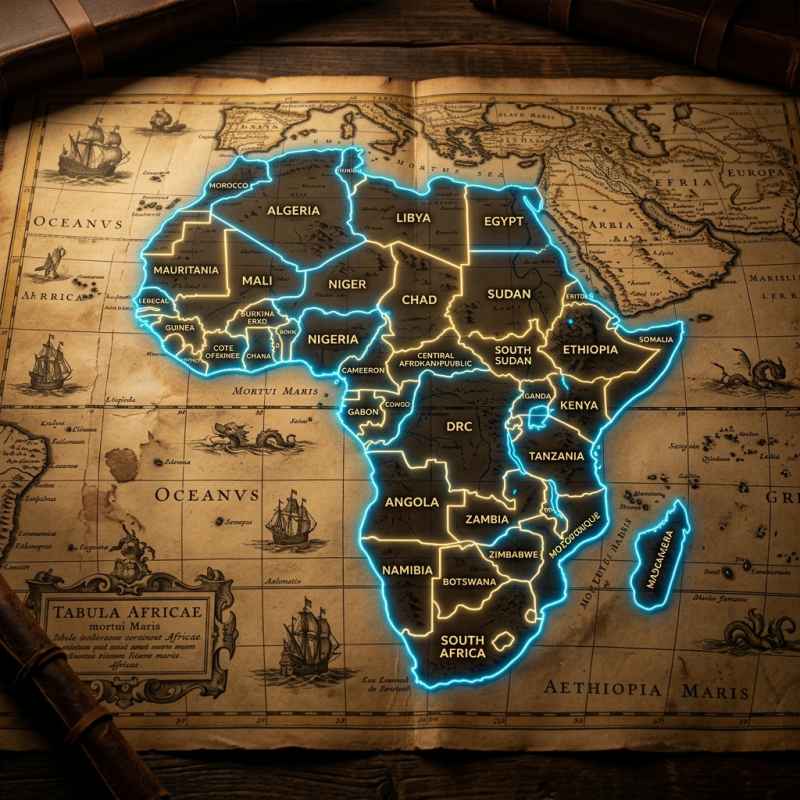
As a result, North America and Europe appear vast and dominant, while Africa and South America are visually diminished. In reality, the continent of Africa is immense—it can fit the United States, China, India, and most of Europe within its borders. Yet, traditional maps strip Africa of its true scale. This visual distortion subtly reinforced colonial narratives, projecting Western supremacy by literally placing the Global North at the top and exaggerating its physical magnitude.
Decolonizing the Map
Today, cartographers and activists are pushing to decolonize our perceptions of the world. By introducing alternative projections, such as the Gall-Peters projection or the AuthaGraph, they aim to present landmasses in accurate proportions. Decolonizing cartography is not merely an academic exercise; it is a vital step toward correcting historical injustices and reshaping global psychological paradigms.
Experts emphasize the importance of decolonizing perceptions about Africa and the Global South. Correcting the map means correcting the mindset. When citizens of the world see the true scale of developing nations, it challenges long-held, implicit biases about economic power, resources, and geopolitical importance. Cartographers are taking on centuries of Western bias to provide a fairer, more equitable view of our shared planet.
Politics, Borders, and the Power of Lines
Beyond geographical proportions, the very lines we draw to signify borders are inherently political. Maps legitimize territorial claims. When political situations change fast—such as during conflicts, treaties, or the dissolution of empires—maps are immediately redrawn to reflect the new realities of power. A line on a map can divide communities, allocate vast natural resources, and define national identities.
Governments have historically banned maps that do not align with their official territorial claims, proving that cartography is a powerful tool of statecraft. The simple act of including or excluding a specific border region can spark international diplomatic incidents. Ultimately, we must view maps not as objective scientific documents, but as compelling arguments about how the world is, or how the mapmaker wishes it to be.
As we navigate an increasingly complex global society, geographic literacy requires critical thinking. We must constantly ask ourselves: Who drew this map? What was their purpose? And what hidden truths might these borders be obscuring?
Written by
Admin New
Admin • Total Kontribusi: 4495 artikel
Administrator of ModerNews
Reader discussion
Komentar (0)
Share your thoughts respectfully.