South Korean Won Surges Following Rate Hike

Admin New
Daftar Isi
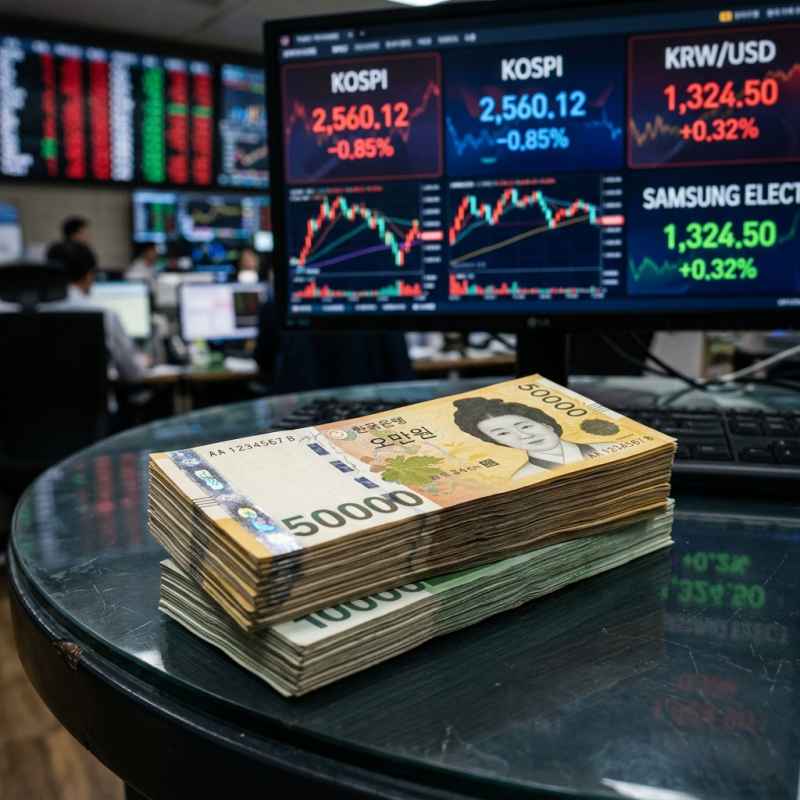
The South Korean Won has recently experienced a dramatic surge, reaching its strongest levels in months. This significant currency appreciation is deeply tied to the aggressive monetary policy measures implemented by the Bank of Korea (BOK). As global financial markets navigate a period of high volatility, the decisive actions taken by South Korea’s central bank have captured the attention of investors worldwide, directly impacting foreign exchange dynamics and overarching investment sentiment.
Bank of Korea Implements Consecutive Rate Hikes
In its latest policy meeting, the Bank of Korea officially announced a decision to raise its benchmark interest rate by 25 basis points (bps). This move marks a continuation of consecutive rate hikes aimed at cooling down persistent inflationary pressures. The core inflation rate has been biting deep into the domestic economy, compelling monetary policymakers to maintain a hawkish stance. By increasing borrowing costs, the central bank is signaling a resolute commitment to stabilizing consumer prices, even if it means risking a temporary slowdown in short-term economic growth.
Core inflation, which strips out highly volatile food and energy prices, has remained stubbornly high. Price pressures stemming from the robust services sector and resilient domestic demand left the Bank of Korea with very few alternatives. Financial analysts largely view the 25 bps hike as a necessary and targeted measure. It provides the market with clear forward guidance that the central bank will not prematurely ease its tightening cycle until inflation is firmly directed back toward its official target range.
The Surge of the South Korean Won
The financial markets reacted almost instantly to the central bank’s policy announcement. The South Korean Won strengthened sharply against major global currencies, hitting recent highs. This powerful appreciation is primarily driven by the widening interest rate differentials. As the yield on Won-denominated assets becomes increasingly attractive, foreign capital is naturally flowing back into the South Korean financial system. International investors are constantly on the lookout for higher, risk-adjusted returns, and the BOK’s hawkish position provides exactly that.
Furthermore, the proactive approach by the central bank has significantly anchored market expectations regarding currency volatility. A strict, calculated monetary policy reassures investors about the foundational strength of South Korea's macroeconomic environment. This wave of positive sentiment extends beyond the currency markets, bringing a degree of stability to both the domestic bond and equity markets. However, local businesses now face the undeniable reality of adapting their operations to a prolonged environment of higher capital costs.
Economic Outlook Amidst Ongoing Inflationary Risks
Looking ahead, the South Korean economy still faces a complex landscape of formidable challenges. While a stronger Won undeniably helps to reduce the cost of imported goods—especially critical energy resources and industrial raw materials—persistently high interest rates could eventually suppress household consumption and stifle corporate credit expansion. The Bank of Korea continues to walk a tightrope, striving to tame relentless inflation without inadvertently pushing the economy into a severe recession.
For global market participants and international trading partners, these developments in South Korea serve as a crucial barometer for monetary tightening trends across the broader Asian region. The central bank's ability to successfully navigate this economic turbulence will be closely monitored. As long as core inflation shows no definitive signs of a meaningful retreat, markets must brace for interest rates to remain elevated for an extended period. The stability of the Won will continuously be tested by shifting global sentiments and the monetary policy trajectories of other major central banks, particularly the United States Federal Reserve.
Ultimately, the recent surge of the South Korean Won and the decisive rate hikes by the Bank of Korea underscore the necessity of bold intervention in current macroeconomic conditions. Both consumers and the corporate sector must strategically adjust their financial planning to endure a high-rate environment. Simultaneously, complementary fiscal policies from the government will be essential to cushion the blow of expensive borrowing, ensuring long-term resilience.
Written by
Admin New
Admin • Total Kontribusi: 4495 artikel
Administrator of ModerNews
Reader discussion
Komentar (0)
Share your thoughts respectfully.