Smart Parking in Pangkalpinang Sparks Debate

Admin New
Daftar Isi
Digital Transformation and Local Economic Challenges
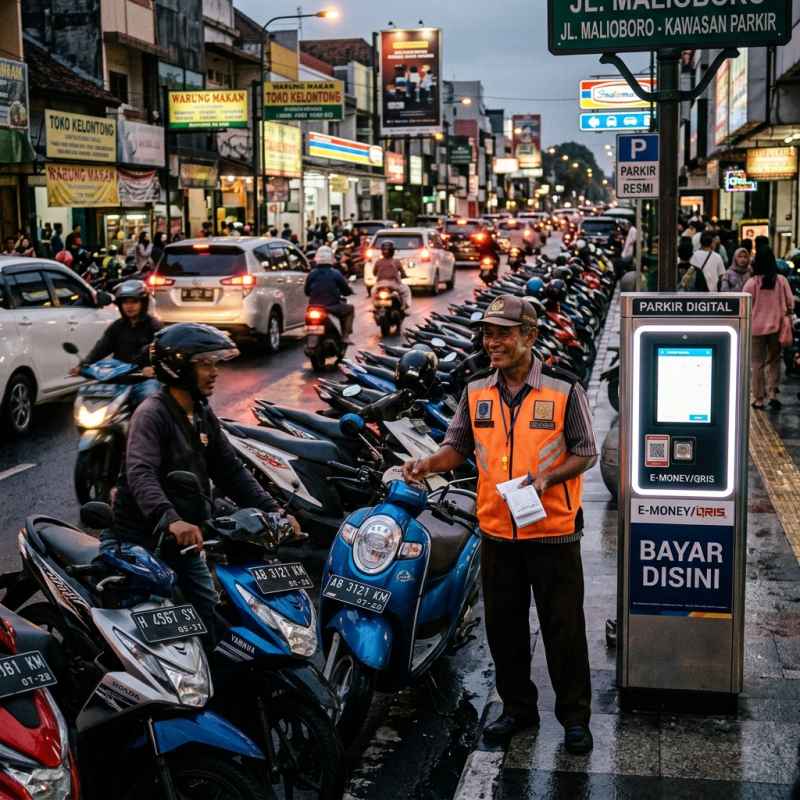
The municipal government of Pangkalpinang is currently preparing to implement a comprehensive Smart Parking system across the city. This initiative is being taken as a critical step toward modernizing urban management and boosting Local Own-source Revenue (PAD). However, beneath the promising vision of technological advancement lies a significant social and economic dilemma. The deployment of this digital framework has sparked profound concerns, particularly for hundreds of traditional parking attendants who have long relied on this informal sector for their livelihood.
Innovation inevitably presents a double-edged sword. On one hand, digitalization promises unprecedented efficiency, order, and financial transparency. On the other hand, there is a very real and imminent threat to the livelihoods of low-income citizens if the transition is not managed with extreme care. This development forces local authorities to brainstorm innovative ways to ensure that technological progress does not inadvertently sacrifice the welfare of their own residents.
A Real Threat to 800 Parking Attendants
According to recent reports circulating within the community and local media, the new Smart Parking policy poses a direct threat to the income of approximately 800 parking attendants scattered throughout Pangkalpinang. This is not a negligible number for a city of its size. Thousands of family members depend on the daily earnings generated from directing and guarding vehicles on roadsides, traditional markets, and modern shopping centers.
The transition toward an automated or cashless payment system inherently means reducing the need for human labor on the ground. These fears are highly justified, as the majority of these parking attendants may not possess adequate alternative skills to immediately switch professions. A sudden loss of income sources risks spiking the unemployment rate and triggering fresh social issues amidst an already challenging economic climate.
Official Transportation Agency Data: Only 376 Registered Attendants
In response to the growing controversy, the Pangkalpinang City Transportation Agency (Dishub) provided crucial clarification regarding the actual number of parking attendants operating in their jurisdiction. The agency confirmed that the number of officially registered parking attendants, who hold legal permits to operate, stands at exactly 376 individuals. There is a massive discrepancy between the official government data and the reality on the ground, which cites a figure of around 800 people.
This revelation uncovers another layer of the problem: the proliferation of illegal or unofficial parking attendants who have been operating without strict supervision for years. The introduction of the smart parking system actually aims to eradicate these unauthorized practices, which often disadvantage the wider public due to unregulated tariffs and opaque management. However, resolving this long-standing issue cannot be done instantaneously without considering the fate of those who have already built their lives on the streets.
Arnadi's Warning: Prevent the Emergence of New Problems
Local community leader and observer, Arnadi, also shared his perspective on this pressing issue. He strictly warned the city government to ensure that the implementation of Smart Parking does not create entirely new problems. "The initial goal to organize the system is inherently good, but the execution must remain humane," he asserted. A rigid approach focused solely on increasing regional revenue is perceived to potentially backfire, damaging social stability in Pangkalpinang.
Arnadi emphasized the critical importance of finding a middle ground. He proposed that the current parking attendants, both registered and unregistered, be provided with specialized training and recruited as operators, supervisors, or maintenance staff for the new parking system. This strategy ensures that technology can progress without discarding the human workforce surrounding it. The government must step in not just as a regulator, but as a facilitator guaranteeing the survival of its citizens.
Moving Toward a Just Transition
The ultimate success of the Smart Parking implementation in Pangkalpinang will not be judged solely by the technical sophistication of the system, but by how smoothly the transition is handled for the affected communities. Open and transparent dialogues between the government, parking management companies, and representatives of the parking attendants must be intensified immediately. Involving all stakeholders is the primary key to mitigating conflict and formulating policies that result in a win-win solution.
Pangkalpinang’s future as a smart city is undeniable, and innovations like electronic parking are crucial steps in that direction. True development, however, must always place human welfare as its top priority. Integrating modern technology while actively protecting vulnerable community groups is the greatest challenge and the ultimate test of wisdom for Pangkalpinang's policymakers today.
Written by
Admin New
Admin • Total Kontribusi: 4517 artikel
Administrator of ModerNews
Reader discussion
Komentar (0)
Share your thoughts respectfully.