Japan Tsunami Tragedy: Warning Failure

Admin New
Daftar Isi
The 2011 Japan Tsunami Disaster
In 2011, the world witnessed one of the most devastating natural disasters in modern history when a massive earthquake triggered a colossal tsunami off the coast of Japan. This catastrophic event not only highlighted the terrifying power of nature but also exposed a critical and tragic flaw in the early warning systems that the public heavily relied upon. A seemingly simple miscalculation in the critical moments following the earthquake ultimately led to the loss of tens of thousands of lives.
A Fatal Miscalculation in Early Warnings
Immediately after the magnitude 9.0 megathrust earthquake struck the Tohoku region, Japan's early warning systems scrambled to release wave height estimations. Initially, authorities and technological systems predicted that the incoming tsunami waves would only reach a height of approximately 3 meters. Based on this initial estimation, a significant portion of the coastal population believed they either had ample time to evacuate or were already situated in locations safe from the ocean's reach.
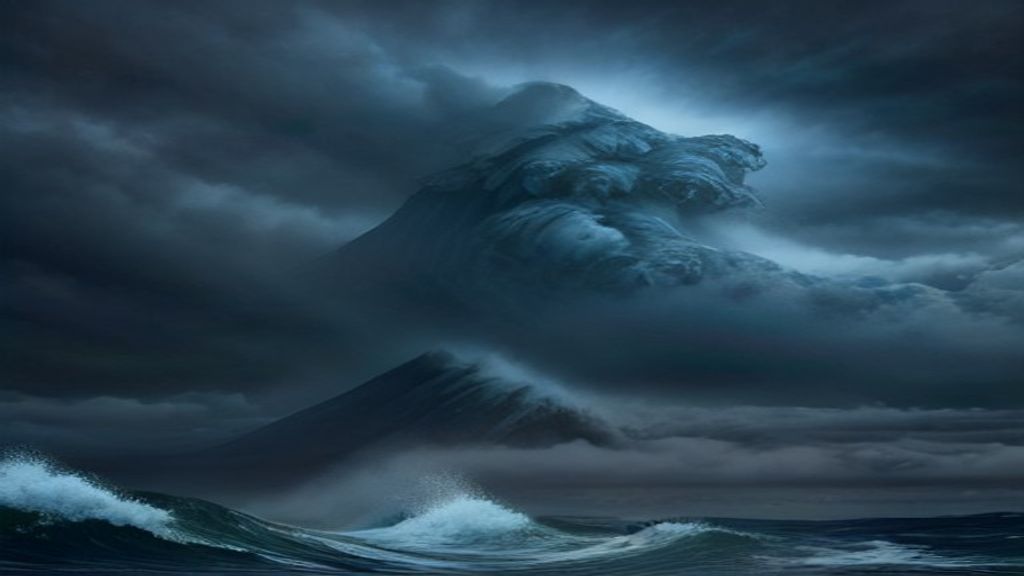
However, the reality on the ground was drastically and horrifically different from the initial technological predictions. The massive walls of water that ultimately crashed into the coastline reached staggering heights of up to 40 meters in certain areas. This massive discrepancy in estimation proved fatal. Because the public believed the threat was relatively manageable, evacuation procedures were lethargic for some, and countless individuals remained in extreme danger zones until the deadly waves obliterated everything in their path.
Devastating Impact and Human Cost
As a direct consequence of this early warning miscalculation, over 18,500 individuals lost their lives almost instantly. Entire coastal cities were flattened into debris, critical infrastructure was completely destroyed, and hundreds of thousands of residents were left homeless overnight. This tragedy serves as a bitter and enduring reminder that even the most advanced early warning technology can fail disastrously if the initial parameters and seismic interpretations are not entirely accurate.
Many of the victims would have likely had enough time to flee to higher ground had the initial warning accurately reflected the true magnitude of the incoming 40-meter wave. The systemic failure triggered intense global criticism and prompted a profound evaluation of how seismic and oceanic data are processed during extreme megathrust earthquake scenarios.
Lessons Learned and Technological Advancements
In the aftermath of the 2011 Tohoku disaster, the Japanese government alongside global seismology experts undertook a massive overhaul of their tsunami early warning technologies. The modernized systems are now strictly programmed to avoid underestimating potential wave heights, especially when an earthquake exceeds a magnitude of 8.0. Highly advanced offshore underwater sensor networks have been extensively deployed to provide precise, real-time data regarding ocean floor displacement.
These extensive technological upgrades aim to guarantee that a catastrophic error—like confusing a 3-meter wave with a 40-meter wall of water—will never occur again. Furthermore, public education has shifted drastically. Citizens are now rigorously trained to instinctively seek the highest ground possible following a major tremor, rather than waiting for or strictly relying upon initial digital estimates. This crucial combination of resilient technology and proactive community preparedness is now the global standard for disaster mitigation.
Written by
Admin New
Admin • Total Kontribusi: 4495 artikel
Administrator of ModerNews
Reader discussion
Komentar (0)
Share your thoughts respectfully.