Indonesia's Sugar Dream: Can It Reclaim Glory?

Admin New
Daftar Isi
Envisioning the Future of the National Sugar Industry
Indonesia was once recorded in history as one of the world's largest sugar producers and exporters during the Dutch East Indies era. Today, the government, through various relevant ministries, is working tirelessly to reclaim that past glory by targeting national sugar self-sufficiency. This ambitious effort raises a significant question among economic observers and industry players alike: is the return of the Republic of Indonesia as a global sugar giant merely a pipe dream, or a reality currently under construction?
The push to achieve food independence, particularly for the sugar commodity, continues to be accelerated in tandem with the increasing demands of both household consumption and large-scale industrial needs. Without concrete and strategic steps, a prolonged reliance on imports will continue to deplete foreign exchange reserves and severely weaken the country's national food security in the foreseeable future.
Sugarcane Downstreaming and the 'Gula Tumbu' Innovation
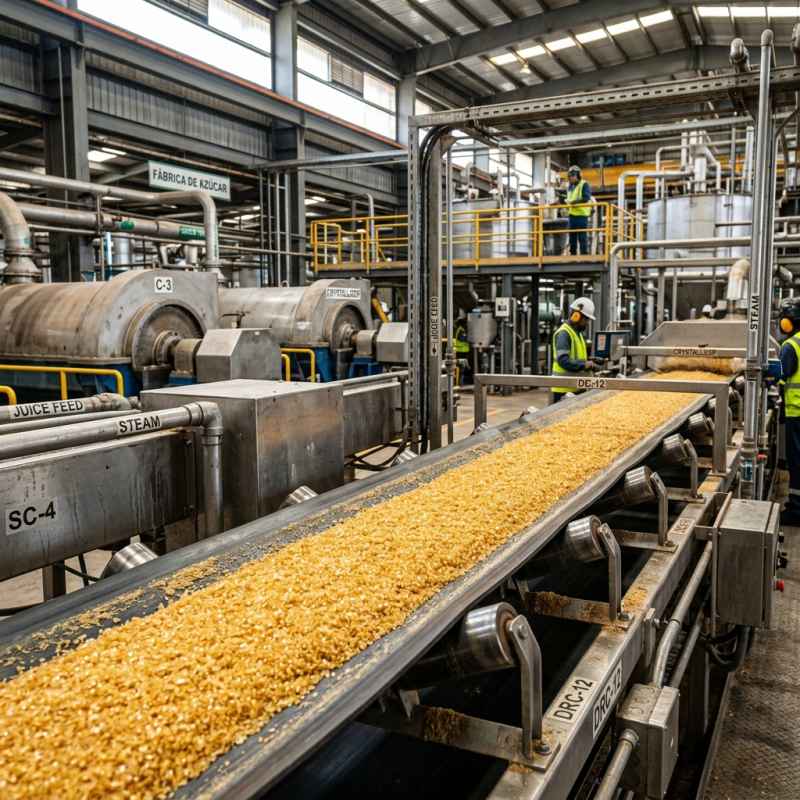
One of the tactical measures currently being promoted by the Ministry of Agriculture (Kementan) is the development of derivative products through downstreaming. Kementan is actively pushing for the development of 'gula tumbu' (traditional raw sugar) as an alternative product for sugarcane downstreaming. This strategy is considered highly crucial for increasing the added value for grassroots sugarcane farmers, ensuring they do not rely solely on selling raw sugarcane to massive factory conglomerates.
By establishing medium and small-scale processing facilities that produce gula tumbu, the supply chain can be significantly shortened. Furthermore, this initiative opens up new employment opportunities in rural areas and strengthens local economic circulation. Downstreaming is no longer just a bureaucratic buzzword; it is an urgent necessity to maintain price stability and farmer welfare amidst the wild fluctuations of the global commodity market.
Land and Investment Challenges for Refined Sugar Factories
However, the road to self-sufficiency is far from smooth. Under current regulations, sugar factories are mandated to have their own sugarcane plantations to guarantee a sustainable and continuous supply of raw materials. Currently, around 11 refined sugar factories are assessed to be heavily constrained by the lack of available land and the massive investment capital required. The obligation to own plantations poses a severe challenge, as land acquisition in Indonesia frequently clashes with spatial planning issues, overlapping permits, and resistance from local communities.
For investors, opening a new, large-scale sugarcane plantation requires a massive injection of capital and entails a very long return on investment period. This harsh reality makes it difficult for several refined sugar factories to meet the deadlines and requirements set by the government. Without additional incentives or simplified licensing from the state, this self-plantation mandate could ironically result in a decrease in the production of refined sugar, which is desperately needed by the domestic food and beverage industry.
Policy Synergy Toward Self-Sufficiency
To realize the grand dream of becoming a global sugar giant once again, the government cannot rely solely on mandatory planting regulations. There must be a strong synergy across ministries to provide legal certainty for land investors, deliver accurately targeted fertilizer subsidies for sugarcane farmers, and modernize the aging machinery in state-owned enterprise (BUMN) sugar mills, most of which are decades old.
In conclusion, the dream of sugar self-sufficiency is not an impossible feat. By optimizing downstreaming efforts like gula tumbu, resolving land conflicts for refineries, and fostering a healthy, transparent investment climate, Indonesia possesses all the fundamental assets required. Now, the responsibility lies with policymakers to ensure that on-the-ground implementation aligns perfectly with the national food security blueprint.
Written by
Admin New
Admin • Total Kontribusi: 4505 artikel
Administrator of ModerNews
Reader discussion
Komentar (0)
Share your thoughts respectfully.