Indonesia Taps Military for Tax Compliance

Admin New
Daftar Isi
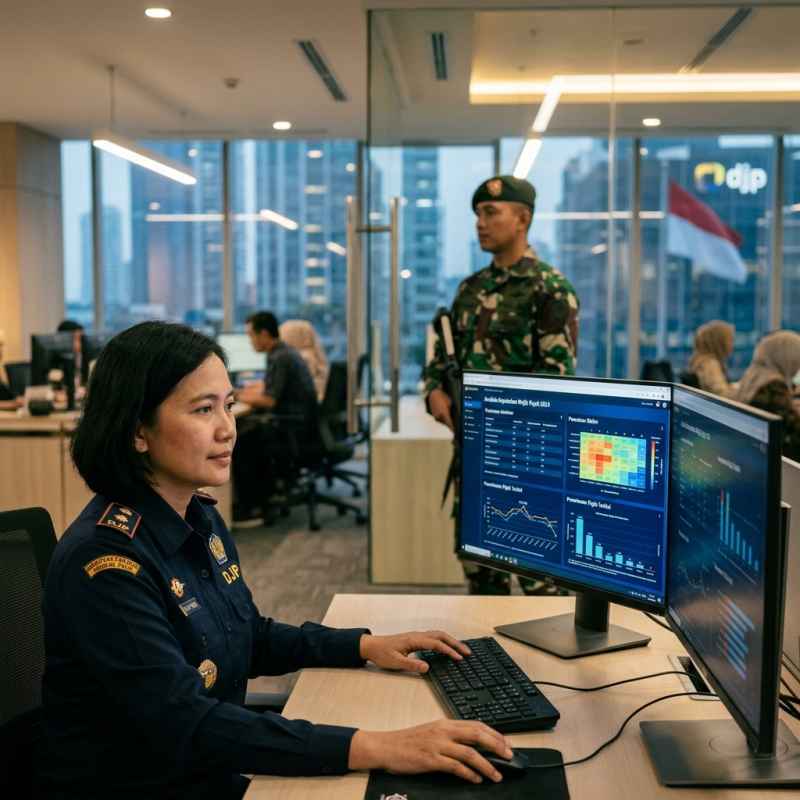
The Directorate General of Taxes (DJP) under Indonesia's Ministry of Finance has introduced an aggressive and multi-layered strategy to secure and maximize state revenue. Facing the ongoing challenge of a relatively low tax-to-GDP ratio, the government is now deploying a dual-pronged approach. This entails the use of sophisticated digital surveillance tools, specifically web scraping, combined with strategic on-the-ground collaborations involving national security forces, namely the Indonesian National Armed Forces (TNI) and the Indonesian National Police (Polri).
Strategic Collaboration with Law Enforcement and Military
The Ministry of Finance's decision to involve military and police personnel in tax oversight has sparked considerable public discourse. Officially, the government insists that the presence of TNI and Polri officers is not intended to intimidate citizens or act as aggressive debt collectors. Instead, their role is to ensure the safety of tax officials and assist in monitoring general compliance at the grassroots level. The TNI Headquarters recently issued a statement regarding the deployment of village supervisory non-commissioned officers (Babinsa) for tax matters. The military clarified that Babinsa personnel will only provide territorial security and accompaniment during tax socialization programs. They will not interfere with the technicalities of calculating individual or corporate tax liabilities.
The presence of Babinsa and local police officers (Bhabinkamtibmas) is considered highly strategic due to their close relationship with local communities. Educating the public about the importance of taxes for infrastructure development and national economic recovery is expected to be more effective when delivered through a humanized, community-based approach facilitated by these territorial officers.
Digital Innovation: Utilizing Web Scraping Technology
Beyond human resources, the Directorate General of Taxes is rolling out advanced technological measures to capture hidden tax potential. A prominent innovation in this digital arsenal is web scraping. This automated technique allows tax authorities to extract vast amounts of public data from various websites, e-commerce platforms, and social media networks. By leveraging this technology, the government can map the digital economic footprint of its citizens.
Through web scraping, authorities can cross-reference online behavior with official tax returns. For instance, if an individual frequently displays a luxurious lifestyle on social media or operates a highly lucrative online business but reports zero income on their Annual Tax Return (SPT), the system will automatically generate a red flag. The scraped data is subsequently integrated and matched with the DJP's core tax system to identify discrepancies and potential non-compliance. This technological leap is seen as a crucial step in taxing the rapidly expanding digital economy, which has historically been difficult to monitor using conventional auditing methods.
Securing National Development Through Taxation
These assertive and innovative steps highlight the government's unwavering commitment to closing loopholes and minimizing tax evasion. Tax revenue remains the primary backbone of the State Budget (APBN), funding essential sectors such as fuel subsidies, highway construction, public healthcare facilities, and educational equalization across the archipelago. Therefore, the synergy between territorial security enforcement and digital data intelligence is expected to create a fairer, more robust tax compliance ecosystem.
The Ministry of Finance continues to urge the public not to panic over these new policies, provided they fulfill their tax obligations honestly and transparently. In fact, data transparency backed by technology ensures that the tax burden is distributed equitably. It specifically targets high-net-worth individuals and profitable digital entities that have yet to contribute their fair share to the nation. Economic observers suggest that this stringent law enforcement must be balanced with improved public services from the tax office, ensuring that paying taxes is viewed as a patriotic duty in the modern era rather than a burdensome obligation.
Written by
Admin New
Admin • Total Kontribusi: 4517 artikel
Administrator of ModerNews
Reader discussion
Komentar (0)
Share your thoughts respectfully.