Indonesia Condemns Red Sea Ship Attacks

Admin New
Daftar Isi
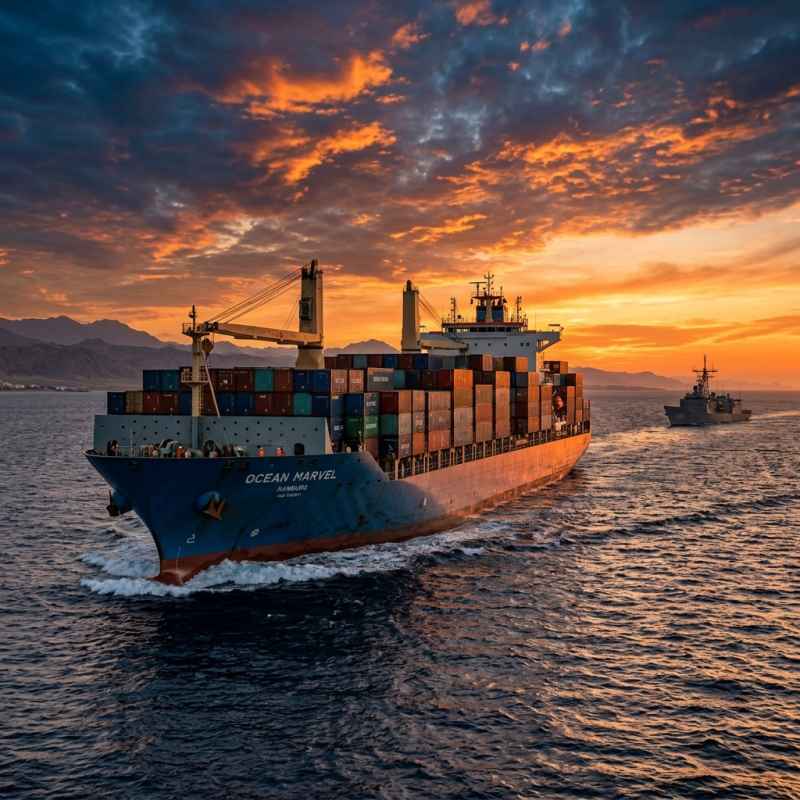
Geopolitical tensions in the Middle East have escalated significantly, directly impacting international trade routes, particularly in the highly strategic waters of the Red Sea. The Government of the Republic of Indonesia has officially and strongly condemned the recent series of coordinated attacks targeting commercial ships navigating this crucial maritime corridor. These alarming incidents not only pose a severe and immediate threat to the lives of innocent seafarers but also carry the profound potential to paralyze the lifeblood of global commerce, which relies heavily on the uninterrupted flow of global shipping lanes.
Indonesia's Firm Diplomatic Stance
In an official statement released by the Ministry of Foreign Affairs, the Indonesian government emphasized that deliberate attacks on civilian vessels constitute a blatant and unacceptable violation of international maritime law. Indonesia underscored the absolute necessity of preserving freedom of navigation and ensuring the utmost safety for all cargo and civilian ships traversing international waters. The violent actions perpetrated by Houthi forces in the Red Sea are deemed entirely unjustifiable, especially considering the widespread and devastating economic repercussions they inflict on nations worldwide. Developing countries, in particular, remain disproportionately vulnerable to commodity price shocks triggered by such unexpected geopolitical instability.
Warnings from the International Maritime Organization (IMO)
Echoing Indonesia's deep concerns, the International Maritime Organization (IMO) has issued a stern and urgent warning regarding the looming threat of a global supply chain crisis. The Red Sea serves as the primary strategic gateway to the Suez Canal, one of the world's busiest artificial waterways efficiently connecting Asian and European markets. According to data provided by maritime analysts and the IMO, approximately fifteen percent of total global trade and thirty percent of global container traffic transit through this vital route annually. Continuous armed disruptions in this region have forced major international shipping conglomerates to drastically alter their usual routes, instead diverting massive cargo vessels around the vast continent of Africa via the Cape of Good Hope. This massive logistical detour not only adds up to two extra weeks of transit time but also triggers unprecedented surges in daily fuel consumption and maritime shipping insurance premiums.
Implications for the Global Economy and Supply Chains
The persistent and evolving threats to maritime security in the Red Sea are actively creating a severe ripple effect across the entire global economy. Economic experts are increasingly warning that the sudden, steep spike in logistical shipping costs resulting from these unprovoked disruptions will ultimately be passed down to everyday consumers, potentially reigniting stubborn inflationary pressures across various economies. The global energy sector remains particularly vulnerable in this crisis, as the Red Sea is a primary maritime artery for the steady distribution of crude oil and liquefied natural gas from the Middle East to international consumer markets. If the current escalation of armed conflict persists without immediate, concrete diplomatic intervention, projected critical shortages of essential goods and soaring global energy prices could severely stall post-pandemic global economic recovery efforts.
A Call for Immediate De-escalation and Peaceful Dialogue
In the face of this increasingly complex and highly volatile situation, Indonesia strongly urges all involved parties to exercise maximum restraint and immediately de-escalate the armed conflict. Furthermore, the Indonesian government explicitly calls upon the broader international community and the United Nations to undertake measured, robust diplomatic initiatives aimed at fully restoring maritime security in the Red Sea. The baseline stability of international maritime trade is not merely a localized priority for global superpowers; it is an absolute, essential requirement for the entire global population to ensure baseline economic continuity. A peaceful, negotiated diplomatic resolution is desperately needed now to safeguard the integrity of essential global supply chains.
Written by
Admin New
Admin • Total Kontribusi: 4527 artikel
Administrator of ModerNews
Reader discussion
Komentar (0)
Share your thoughts respectfully.