Husein Sastranegara Airport's New Era

Admin New
Daftar Isi
Husein Sastranegara International Airport has long served as the primary aviation gateway for visitors traveling to Bandung, the vibrant and culturally rich capital of West Java, Indonesia. Nestled incredibly close to the city center, this transportation hub is steeped in both history and practical convenience. For decades, it has been the preferred point of entry for domestic and international tourists alike, eager to explore the cool climates, thriving culinary scenes, and bustling fashion outlets of the Paris of Java. As aviation landscapes evolve, so too does the role of this historic airport, ushering in a brand-new era for West Java's travel infrastructure.
The Historical Gateway to West Java
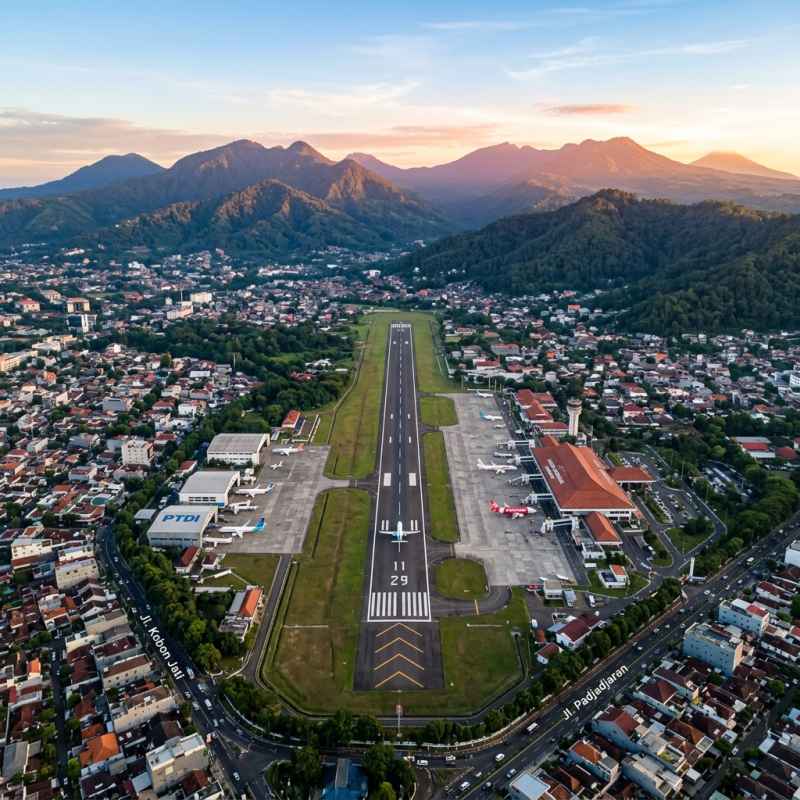
Built during the Dutch colonial period, Husein Sastranegara International Airport is far more than just a runway and a terminal. It represents the rapid modernization of Bandung over the 20th and 21st centuries. Unlike many modern airports situated miles away from urban areas, Husein Sastranegara boasts a unique geographical advantage. Passengers landing here are treated to stunning aerial views of the surrounding mountainous terrain and are virtually steps away from major tourist hotspots. The sheer convenience of stepping off a plane and arriving at iconic locations like Braga Street or Cihampelas Walk in under thirty minutes made this airport a beloved asset for frequent flyers and weekend vacationers.
Operational Shifts and Modernization
Recently, the Indonesian government implemented significant operational changes to optimize airspace and improve regional infrastructure. A major strategic shift involved transferring commercial jet operations from Husein Sastranegara to the larger, newly constructed Kertajati International Airport in Majalengka. This transition was designed to alleviate urban congestion, enhance flight safety margins in mountainous terrain, and stimulate economic growth across the broader West Java region.
Despite this massive shift, Husein Sastranegara International Airport is far from obsolete. The facility has successfully pivoted its operational focus. Today, the airport primarily caters to commercial propeller aircraft, private aviation, military operations, and very important person (VIP) transport. This specialized approach ensures that the facility remains an active, vital component of Indonesia’s aviation network while embracing a more boutique, specialized operational model.
Impact on Local Tourism and Economy
The transition of jet flights to Kertajati initially sparked conversations among local hospitality and tourism stakeholders regarding the potential impact on visitor numbers. However, Bandung's tourism sector has proven remarkably resilient. The operational shift at Husein Sastranegara coincided perfectly with the launch of the Jakarta-Bandung High-Speed Railway (Whoosh), which has revolutionized ground travel and brought massive influxes of tourists from the capital. Meanwhile, Husein Sastranegara continues to facilitate crucial regional connectivity, allowing travelers from smaller cities to reach Bandung efficiently via turboprop flights. The local economy has seamlessly integrated these multiple transport modes.
What the Future Holds
Looking ahead, Husein Sastranegara International Airport is perfectly positioned to serve as a premium hub for specialized aviation. City planners and aviation experts envision a future where the airport supports localized aerospace industries, aviation training academies, and exclusive charter services. While the massive commercial jetliners have moved on, the legacy and operational heartbeat of Husein Sastranegara remain entirely intact. It stands as a testament to Bandung's adaptive nature, continuously evolving to meet the demands of modern infrastructure while preserving its historical significance in the heart of West Java.
Written by
Admin New
Admin • Total Kontribusi: 4495 artikel
Administrator of ModerNews
Reader discussion
Komentar (0)
Share your thoughts respectfully.