Fed Raises Rates for First Time

Admin New
Daftar Isi
A Historic Shift in US Monetary Policy
The United States Federal Reserve has officially instituted its first interest rate hike in three years, signaling a definitive end to the pandemic-era monetary policies that provided unprecedented liquidity to the financial system. This landmark decision marks a significant pivot as the central bank shifts its primary focus toward combatting persistent and elevated inflation. For years, near-zero interest rates served as the bedrock of aggressive economic stimulus, driving both consumer spending and a historic bull run across global equity markets. However, the rapidly rising cost of living has forced policymakers to take decisive action.
The move to tighten monetary policy has been heavily telegraphed, yet its actual implementation still sends ripples through the global economy. By increasing the cost of borrowing, the Federal Reserve aims to cool down consumer demand and alleviate the intense pressure on strained supply chains. This delicate balancing act requires the central bank to rein in inflation without inadvertently stifling economic growth or triggering a widespread recession, a challenge that will define the financial landscape for the foreseeable future.
Kevin Warsh Weighs In on the Fed's Strategy
Former Federal Reserve Governor Kevin Warsh has provided critical commentary on this highly anticipated policy shift. Speaking to major news outlets, Warsh emphasized that this initial rate hike is a crucial acknowledgment by the Fed that inflationary pressures are far from transitory. He highlighted the necessity of a clear and resolute framework moving forward, arguing that the central bank must maintain credibility in the eyes of institutional investors and the broader public alike.
Warsh also pointed out the systemic vulnerabilities that complicate the Fed's current trajectory. With corporate debt hovering at historically high levels, even incremental increases in borrowing costs can profoundly impact corporate balance sheets and profitability. He cautioned that the true test for the Federal Reserve will not be this initial hike, but rather how it navigates subsequent adjustments in the face of unpredictable economic indicators and potential geopolitical headwinds.
Market Volatility: Sell-Offs and Surprising Rebounds
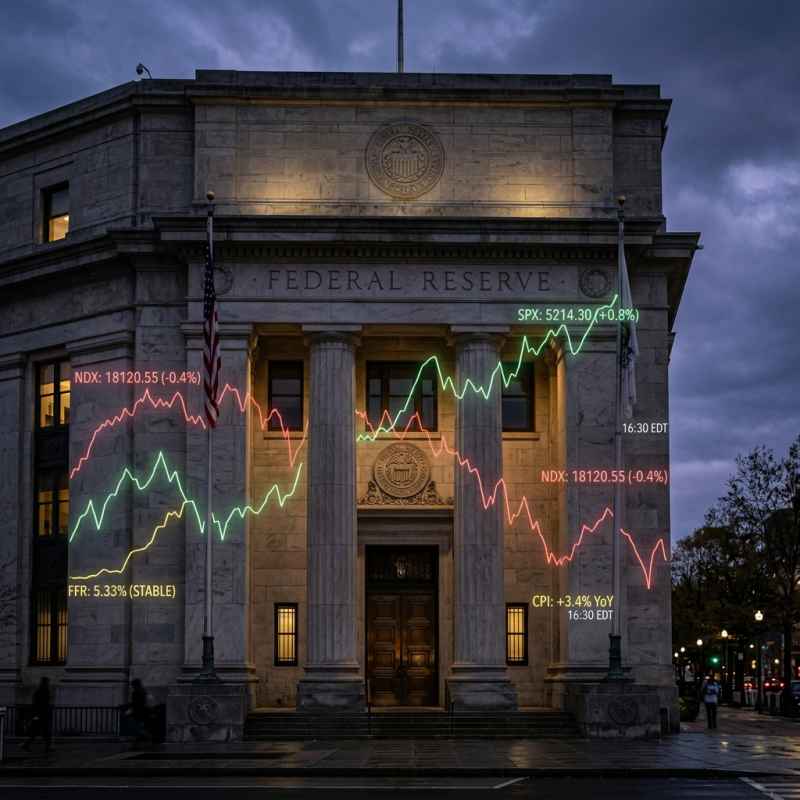
Wall Street's reaction to the interest rate increase has been characterized by intense volatility. In the immediate aftermath of the announcement, financial markets experienced a sharp sell-off. Equities, particularly growth-oriented and technology stocks whose valuations heavily rely on future earnings discounted at low rates, took the hardest hit. Nervous investors liquidated positions in a rapid flight to safety, anticipating that tighter financial conditions would invariably compress corporate margins.
Remarkably, the gloom was short-lived. Stock futures began to climb steadily after the initial panic subsided, illustrating the complex psychology of modern markets. This robust rebound suggests that market participants had largely priced in the Fed's hawkish pivot. Investors appear to be finding solace in the certainty of the announcement, interpreting the rate hike as a necessary step to ensure long-term economic stability rather than a death knell for the current market cycle.
Strategic Implications for Global Investors
As the ripple effects of the Federal Reserve's decision spread globally, emerging markets and international equity indices face renewed pressure. A stronger US dollar and higher domestic yields risk triggering capital outflows from developing economies. Consequently, investors worldwide must meticulously reassess their portfolios, balancing defensive allocations with opportunistic positioning as the era of easy money officially comes to a close.
Written by
Admin New
Admin • Total Kontribusi: 4505 artikel
Administrator of ModerNews
Reader discussion
Komentar (0)
Share your thoughts respectfully.