Complete Guide to Viewing the July Buck Moon

Admin New
Daftar Isi
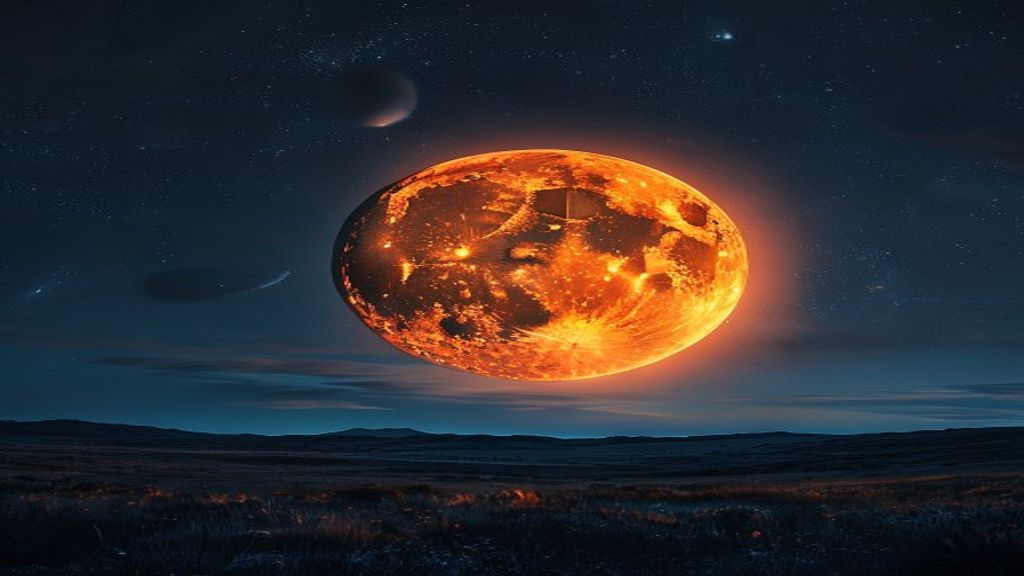
Tonight's night sky is set to deliver one of the most highly anticipated astronomical events of the year: the stunning July full moon, universally recognized as the Buck Moon. The appearance of Earth's natural satellite glowing brightly against the dark expanse is not merely a visual treat for casual stargazers, but it also brings along a host of accompanying celestial phenomena that make this particular evening truly extraordinary. From its mesmerizing orange hue to a majestic planetary parade, tonight offers a cosmic spectacle that you certainly will not want to miss.
Understanding the Origins of the Buck Moon
To many, the term Buck Moon might seem quite unusual. The historical naming convention originates from the traditions of Native American tribes, specifically the Algonquin people. They observed that during the month of July, male deer, known as bucks, begin to grow their new antlers. These emerging antlers, covered in a soft, velvety texture, stand as a powerful symbol of growth, vitality, and renewal during the peak of the summer season. In addition to being called the Buck Moon, this specific lunar event is also widely referred to as the Thunder Moon, due to the high frequency of summer thunderstorms during this time, or the Hay Moon, which connects to the traditional summer hay harvest.
The Mesmerizing Orange Hue and the Planetary Parade
One of the most captivating visual aspects of this year's Buck Moon is the striking orange tint that graces its surface as it rises above the horizon. This exotic coloration is not a random occurrence. Scientifically, this optical phenomenon is caused by a process known as Rayleigh scattering within the Earth's atmosphere. When the moon is positioned low near the horizon, its reflected light must travel through a much thicker layer of our atmosphere. This atmospheric journey scatters the shorter blue light waves, allowing only the longer red, orange, and yellow wavelengths to reach our eyes, creating a breathtaking warm glow.
Furthermore, tonight's Buck Moon acts as the grand marshal of a cosmic parade. According to recent astronomical observations, the brilliant full moon will appear alongside a stunning alignment of planets in our solar system. This rare planetary parade offers an exceptional opportunity for astronomy enthusiasts to observe multiple significant celestial bodies in a single sweeping glance across the heavens. It is a highly photogenic event that astrophotographers are eagerly preparing for.
Top Tips and Strategies for Viewing the Full Moon
To ensure you have the absolute best experience while observing this natural wonder, there are several simple yet effective preparation steps you can follow. First and foremost, seek out a viewing location that suffers from minimal light pollution. The blazing lights of urban environments often wash out the delicate beauty of the night sky, making rural areas, open parks, or high-altitude locations the ideal choices. Ensure that your line of sight toward the eastern horizon remains unobstructed by towering buildings or dense tree canopies.
Secondly, while the Buck Moon is perfectly visible to the naked eye, utilizing optical aids such as a good pair of binoculars or a backyard telescope will reveal intricate lunar details that would otherwise remain hidden. You will be able to trace the outlines of ancient lunar craters and vast dark plains with remarkable clarity. For those interested in photography, securing your camera on a sturdy tripod is essential for long-exposure shots. Using a telephoto lens and manually adjusting your ISO and shutter speed will prevent the incredibly bright moon from becoming an overexposed white blur in your photographs.
Looking Ahead to the August Eclipse Season
The spectacular arrival of the Buck Moon also serves as a critical celestial milestone, indicating that we are steadily approaching the upcoming eclipse season. Astronomers note that following this magnificent July full moon, the intricate orbital mechanics of our solar system will set the stage for an anticipated eclipse phenomenon in August. Therefore, taking the time to observe tonight's sky is not just about appreciating a beautiful visual display, but also about connecting with the precise, ever-turning clockwork of our magnificent universe.
Written by
Admin New
Admin • Total Kontribusi: 4543 artikel
Administrator of ModerNews
Reader discussion
Komentar (0)
Share your thoughts respectfully.